
Affordable eSIM Plans That Save You Money on Data
Tired of overpaying for international roaming? Cheap eSIM plans let you ditch expensive physical SIMs and instantly activate a local data package from your phone for a fraction of the cost. They work by downloading a digital profile, so you can compare and switch between affordable global carriers without ever visiting a store. You get seamless connectivity and significant savings on travel data, all managed from a single app.
Understanding Budget-Friendly eSIM Options
Understanding budget-friendly eSIM options means focusing on paying only for the data you actually need instead of a hefty monthly contract. For cheap esim plans, the key trick is comparing tiny, regional data bundles rather than giant global ones. Most savings come from choosing a local or regional plan over a “worldwide” pass.
The cheapest esim is often the one you buy for a single country, not a multi-country package with features you won’t use.
Always check the plan’s speed cap—a dirt-cheap 4G plan is useless if it throttles to 2G after 500MB. Prioritize plans from providers with easy top-up options, so you can start lean and add only if needed.
What Makes an eSIM Plan Affordable
The affordability of an eSIM plan hinges on three core factors: competitive per-gigabyte pricing and precise data tiers. A plan becomes cheap when it offers a transparent cost per gigabyte without hidden activation fees or mandatory top-ups. Additionally, pay-as-you-go models that let you purchase exactly the data you need, rather than a fixed monthly allowance, prevent waste. Geographic bundling—covering only your destination region—eliminates charges for unused global roaming coverage. Lastly, plans with long validity periods (e.g., 30 days) spread the base cost over more usage days, lowering the daily rate compared to short-term tourist passes.
Q: What single pricing structure makes an eSIM plan affordable?
A: Affordable plans use a pure pay-per-GB model with no daily access fee, so you only pay for the data you consume.
How eSIMs Reduce Roaming Costs
eSIMs slash roaming costs by enabling instant access to local carrier rates without swapping physical SIMs. Instead of paying your home provider’s inflated daily fees, you preload a budget-friendly local data plan from the destination country, often at a fraction of the price. This eliminates surprise bills because you can compare and activate cheap eSIM plans directly on your device before travel. Overlapping a local eSIM with your primary line keeps your home number active for calls while using cheaper local data for navigation and apps, cutting roaming charges by up to 90%.
eSIMs reduce roaming costs by letting users buy and activate local data plans directly, avoiding expensive carrier roaming fees entirely.
Key Differences Between Prepaid and Pay-As-You-Go eSIMs
Prepaid eSIMs require upfront payment for a fixed data allowance, like 10GB for 30 days, while pay-as-you-go eSIMs charge only for actual consumption, deducting from a deposit. The core difference is that prepaid plans lock you into a specific volume and validity period, making them ideal if your usage is predictable. Pay-as-you-go offers flexibility but often at a higher per-GB rate, suited for light or irregular use. Prepaid typically expires after a set time; pay-as-you-go balances last longer.
- Cost certainty is a key difference: prepaid offers a fixed price for a set bundle, whereas pay-as-you-go fluctuates with usage.
- Validity terms differ: prepaid plans have a hard expiry date (e.g., 7–30 days), while pay-as-you-go funds may remain active for months.
- Recharge requirements vary: prepaid plans require buying a new bundle, while pay-as-you-go allows topping up the same eSIM profile with any amount.
Top Regions for Low-Cost Mobile Data
For budget international connectivity, Asia leads the charge with cheap eSIM plans. Southeast Asia offers prolific data bundles; a regional eSIM covering Thailand, Vietnam, and Indonesia often costs under $15 for 10GB. Eastern Europe rivals this, with Poland and Ukraine providing high-value, low-price plans starting below $10. Africa is emerging rapidly, with Nigeria and Kenya offering competitive daily rates. Need a pocket-sized saving? “Where can I get the cheapest unlimited data eSIM right now?” The Baltic states (Lithuania, Latvia) frequently win, with true unlimited 7-day plans hitting $20, a steal for heavy streamers.
Best Value eSIMs for Europe Travel
For Europe travel, the best value eSIMs prioritize regional coverage over single-country plans. Providers like Airalo and Holafly offer plans covering 30+ European countries, with prices starting under $10 for 1–3 GB data. To secure the cheapest option, first confirm your device is unlocked and eSIM-compatible. Then, compare prepaid packages focusing on data allowance and validity, not talk time. Regional European eSIMs often cost less per GB than activating carrier roaming. The typical selection process involves:
- Check coverage for all destination countries.
- Compare price per GB across networks.
- Install the eSIM before departure via QR code.
- Activate the data plan upon arrival.
Affordable Asia-Pacific Data Packages
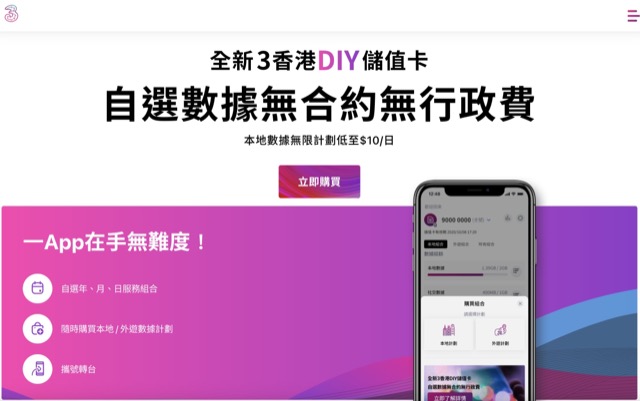
For budget-conscious travelers, Affordable Asia-Pacific Data Packages via eSIMs unlock massive savings. Skip expensive roaming; instead, grab a regional plan covering countries like Thailand, Vietnam, or Indonesia for under $10 per week. You get reliable 4G/5G speeds for mapping and ride-hailing, not throttled junk. Providers like Airalo or Holafly offer flexible bundles with daily high-speed caps, while local operators like Hong Kong’s 3 or Singapore’s Singtel dish out ultralow rates for short stays. A quick comparison reveals the value:
| Plan Type | Typical Cost | Validity |
| Single-Country | $4–$8 | 7–15 days |
| Regional (7+ countries) | $10–$15 | 10–30 days |
Wallet-Friendly Options for North America
For wallet-friendly options in North America, travelers should prioritize carriers offering regional pay-as-you-go eSIMs rather than US-only plans. Providers like Airalo and Holafly sell Canada-Mexico-USA pooled data bundles, which often reduce per-gigabyte costs compared to single-country plans. Smaller operators such as Nomad eSIM or Ubigi frequently undercut major carriers on short trips with targeted 1–7 GB packages. Q: What is the cheapest eSIM for a two-week North American road trip? A: A 5 GB regional plan from Airalo (approx. $12–$15) balances coverage across all three countries without roaming fees.
Comparing Leading eSIM Providers
When comparing leading eSIM providers for cheap esim plans, focus first on data allowances versus price per gigabyte. Providers like Airalo often offer lowest rates for short stays, while Holafly excels with unlimited data packages that avoid overage fees. For multi-country trips, larger providers like Nomad aggregate regional bundles that can undercut single-nation plans. Always verify whether a “cheap” plan throttles speeds after a daily cap (a common sim-limitation not always disclosed). The cheapest option isn’t always practical: MobiMatter frequently beats competitors on per-GB cost but uses latency-prone networks. Prioritize providers with free eSIM scans (no physical sim) to test connectivity before committing your entire trip budget.
Airalo vs. Holafly: Which Fits Your Budget?
For budget-focused travelers comparing Airalo vs. Holafly, your data appetite dictates the winner. Airalo typically offers lower per-gigabyte rates for small data packages, making it ideal for light users who need minimal connectivity for maps and messaging. Conversely, unlimited Holafly plans often provide better value for heavy streamers, despite a higher upfront cost, as you never worry about overage fees. A regional eSIM from Airalo generally beats Holafly for multi-country trips, since Holafly’s single-country unlimited options can become expensive. Always compare the specific destination: Airalo wins on economy for short, low-data needs; Holafly suits data-hungry users who prefer a fixed price for complete freedom.
| Aspect | Airalo | Holafly |
|---|---|---|
| Best for Budget | Light data users (maps, WhatsApp) | Heavy data users (streaming, video calls) |
| Price Model | Pay per GB (cost-effective for small plans) | Unlimited data (higher flat fee) |
| Regional Plans | Often cheaper multi-country bundles | Usually single-country unlimited only |
Ubigi: Cost-Effective Short-Term Plans
For travelers focused on short-term eSIM value, Ubigi’s plans are highly deliberate in their pricing structure. Rather than offering unlimited data, they target specific trip durations—typically 1, 7, or 15 days—with strict data caps that keep costs per gigabyte low for the timeframe. This avoids the premium pricing of month-long passes when only a few days are needed. A logical sequence for leveraging Ubigi effectively includes:
- Selecting a regional data pack (e.g., Europe) rather than country-specific ones to maximize coverage without extra cost.
- Matching the plan’s validity exactly to your travel days to avoid paying for unused time.
- Topping up only if you deplete the allowance, as Ubigi allows incremental data additions without switching plans.
Nomad eSIM: Flexible Pricing for Frequent Travelers
For frequent travelers seeking the cheapest eSIM plans, Nomad eSIM’s flexible pricing directly addresses variable usage needs. Unlike fixed packages, Nomad allows users to pay per gigabyte, costing between $1.00 and $3.00 per GB depending on the region, which eliminates waste from unused data. This is achieved through a clear sequence: first, select a country or region; second, choose either a data-only or data+voice plan; third, adjust the data allowance in small increments (e.g., 1GB, 3GB, 5GB). The cost updates in real-time, so you only purchase what you need. This pinpoint pricing makes Nomad a top choice for budget-conscious frequent travelers who prioritize cost control over unlimited but pricey plans.
- Select your destination or multi-region bundle.
- Pick a data-only or data+voice plan.
- Customize the data allowance in small increments; view the updated price instantly.
- Activate via the Nomad app and pay only for chosen data, avoiding overage fees.
Local Carriers with Competitive eSIM Rates
When seeking cheap eSIM plans, local carriers often provide the most cost-effective data bundles by sidestepping the international roaming markups of global providers. To leverage these rates, install a local carrier’s eSIM directly via its official app upon arrival in the destination. This typically involves a straightforward sequence: first, verify your device’s eSIM compatibility on the carrier’s site; second, select a data-only plan tailored to your stay length; third, complete the purchase and scan the issued QR code to activate. These localized plans deliver significantly lower per‑GB costs compared to regional eSIMs, though they usually lack multi-country coverage.
- Check the official app store for your destination’s major local carrier app.
- Choose a short-term prepaid eSIM bundle (e.g., 7‑day, 10 GB) at the in‑country price.
- Complete online payment and scan the provided activation QR code.
- Switch your mobile data to the new eSIM line for immediate local‑rate access.
Hidden Fees and Money-Saving Tricks
When hunting for cheap eSIM plans, the real savings vanish through hidden activation, top-up, or service fees buried in the fine print. Avoid plans that charge extra for eSIM issuance or require costly minimum top-ups. A true money-saving trick is selecting a plan with a fixed, all-inclusive price—like a 30-day data pass—so you don’t incur daily surcharges or inactivity penalties.
Never pay for unused validity; prioritize plans that offer pure data rollover or zero-fee recharging.
Always check if “free” incoming SMS or local numbers carry a monthly cost. The cheapest plan is only cheap if every listed penny covers exactly what you need, with no surprise deductions later.
Avoiding Activation and Service Charges
When selecting cheap eSIM plans, bypassing hidden activation fees requires scrutinizing provider pricing structures before purchase. Many budget carriers advertise low monthly rates but impose a one-time setup cost, often between $2 and $10, that negates initial savings. Service charges, such as mandatory “network access” or “administration” fees, can also inflate a plan’s effective cost by 15–30%. These markups are frequently buried in the final checkout page rather than the advertised price. To avoid them, focus exclusively on “no activation fee” plans and confirm the total upfront payment includes zero additional service surcharges.
- Choose only eSIM plans explicitly labeled “no activation fee” in their terms
- Decline auto-renewal options that trigger a service charge for re-enabling data
- Verify the quoted price is the total due, excluding any “regulatory” or “admin” add-ons
Choosing the Right Data Allowance to Minimize Waste
Choosing the right data allowance is your first line of defense against wasted money on cheap eSIM plans. Start by auditing your actual usage—streaming and video calls consume gigabytes fast, while messaging and maps sip data. Pick a plan slightly below your average consumption to avoid paying for unused bulk, but ensure you have a top-up safety net for occasional surges. The trick is to match your allowance to your real habits, not marketing hype.
How do I calculate the perfect data amount? Check your phone’s cellular data usage over the past month, divide by 30, then select an eSIM plan closest to that daily average, rounding down by 10% to force mindful usage.
How to Spot Promotional Discounts and Referral Bonuses
Scrolling past the listed price is your first move; instead, look for banners screaming “first-top-up” or “welcome deal” that slash costs for new users. Spotting promotional discounts means clicking the “T&Cs” link to see if the discount applies only to specific data packs or requires a promo code during checkout. For referral bonuses, check your account dashboard after sign-up for a unique referral link—often, the bonus appears as eSIM credit after your referral activates a plan. Then, scan your email inbox for “refer a friend” subject lines from your provider.
- Search provider homepages for “new user” badges or countdown timers on discounts.
- Read the fine print to see if promotional discounts expire after one billing cycle.
- Share your referral link in travel forums to earn bonuses faster.
- Verify whether bonuses are applied as cash or plan discounts.
Maximizing Value with Multi-Country Plans
To maximize value with multi-country plans for cheap eSIMs, target regional bundles instead of global ones. These plans offer far lower per-GB costs by pooling data across neighboring countries.
For example, a European multi-country eSIM covering 30+ nations for under $20 is far cheaper than buying individual local plans for each stop.
Prioritize providers offering “top-up” flexibility that extends your existing bundle’s data at a pro-rated rate, avoiding wasteful overage fees. Always activate your plan at your first destination to fully utilize its validity period across all countries, and disable automatic plan selection to prevent expensive stray network connections that drain your cheap multi-country allowance.
Regional eSIM Bundles That Cover Multiple Destinations
For cheap eSIM plans, regional bundles covering multiple destinations often beat buying separate local plans. These bundles pool data across a defined zone, like Europe or Asia-Pacific, allowing seamless switching between countries without repurchasing. A single 10GB Asia plan is usually cheaper than five separate 2GB country plans. Data roaming is shared across all included nations, expiring on one set date. Q: Do these bundles activate data across all countries automatically? A: Typically yes, but confirm your provider requires no manual reactivation per destination.
Global Packages vs. Country-Specific Deals
For cheap eSIM plans, global packages offer unmatched convenience across dozens of countries, but often carry a price premium compared to targeted deals. Country-specific eSIM deals typically deliver far lower data rates for single-destination trips, making them the clear winner for focused travel. If your itinerary spans only two or three neighboring nations, assembling individual country plans usually proves cheaper than a regional global bundle. However, for multi-stop travelers who value setup simplicity over penny-pinching, a global package sidesteps the hassle of juggling multiple activations.
Q: Should I pick a global package or country-specific deals for a two-week Europe trip?
A: Choose country-specific deals for each destination—they almost always beat global packages on price per gigabyte for concentrated, short-term travel.
Using Hybrid Plans for Mixed Travel Itineraries
Using hybrid plans effectively addresses mixed travel itineraries, like a few days in Japan followed by a week in Thailand. These combo eSIM packages combine a small regional data allowance for cheaper countries with a larger global pool for expensive ones. This avoids purchasing separate local plans for each stop, which can be wasteful. Instead, you allocate high-speed data specifically for the Japan leg, while the global pool covers cheaper Thai roaming. This approach maximizes value by preventing overpaying for multi-country data flexibility within a single budget.
Device Compatibility and Setup Tips
Before committing to a cheap eSIM plan, verify your device is unlocked and supports eSIM profiles; most newer phones from 2020 onwards, like iPhones (XR and later) or Samsung Galaxy S20 series, do, but always check your IMEI on your carrier’s site. Setup is straightforward: scan the QR code from your plan provider or manually enter the activation details, then assign the eSIM as your data line while keeping your physical SIM for calls. For maximum savings, install the eSIM before traveling to avoid roaming fees. Q: My phone says “no eSIM found” after scanning the code—what now? A: This usually means your device is carrier-locked or the eSIM profile is incompatible with your region; contact the cheap eSIM provider first, then check for a software update or factory reset of network settings. Follow these tips to bypass costly setup errors.
Checking Your Phone for eSIM Support
Before jumping on a cheap eSIM plan, you need to verify your phone’s eSIM compatibility to avoid disappointment. Most newer smartphones support it, but older models may not. Check your device’s settings menu (look for “Add eSIM” or “Mobile Network”) or dial *#06# to see if an EID number Japan eSIM appears—this confirms eSIM capability. If you’re unsure, your manufacturer’s support page lists compatible models.
- Go to Settings > Cellular/Mobile Data > Add Cellular Plan to see if the option exists.
- Visit your phone brand’s official website to check its eSIM specifications.
- Search online using “your phone model eSIM support” for quick confirmation.
Quick Installation Guide for New Users
A quick installation guide for new users of cheap eSIM plans centers on two steps: scanning the provided QR code or manually entering the activation code in your device’s cellular settings. After purchasing, you must add the new eSIM line while keeping your physical SIM active, selecting it as the cellular data line. Ensure your device is carrier-unlocked and list of compatible models is checked before purchase, as most budget plans enforce strict device whitelists. Activation typically occurs within minutes, but verifying mobile data and APN settings immediately prevents connectivity gaps. This logical flow—from code entry to data toggle—removes setup friction.
Dual SIM Strategies for Keeping Your Primary Number
A dual SIM strategy for keeping your primary number involves using your existing physical SIM for calls and texts on your home network, while assigning a cheap eSIM plan solely for data. To set this up, first insert your primary SIM into the designated physical slot. Next, configure your phone’s mobile network settings to disable data on the primary SIM and enable roaming if required. Then, download and activate your cheap eSIM plan. Finally, assign the eSIM as the default for mobile data. Your primary number remains active for essential communication, while the eSIM provides budget travel or local data without incurring roaming fees on your primary line.
- Insert your primary physical SIM for voice/SMS.
- Disable data on the primary SIM in settings.
- Activate and assign your cheap eSIM as the data line.
User Experiences with Inexpensive eSIM Plans
Users of cheap eSIM plans frequently report that initial activation is seamless, but actual data speeds often throttle below advertised rates after a few gigabytes, making streaming unreliable. Many find customer support for these budget options frustratingly slow, with resolution times spanning days rather than hours. A recurring positive experience is the ability to switch between multiple budget providers within minutes via app-based management, which helps users avoid expensive roaming in emergencies. However, travelers note that signal priority on shared networks is typically lower than postpaid plans, leading to dropped connections in congested areas. Battery drain is another practical concern, as cheap eSIMs often require constant network searching in low-coverage zones.
Real Feedback on Data Speeds in Popular Cities
Users consistently report that cheap eSIM plans deliver surprisingly robust real-world data speeds in popular cities. In London, travelers confirm 4G LTE often exceeds 40 Mbps, easily handling maps and video calls. Bangkok’s thorough coverage ensures streaming without buffering at peak hours, while New York City sees reliable 20–30 Mbps download speeds even in crowded subway stations. Paris and Tokyo users praise consistent performance for social media and navigation, though some note minor slowdowns during rush hour. The feedback proves that budget eSIMs effectively meet daily connectivity needs across major global hubs.
| City | Reported Average Speed | User Feedback |
|---|---|---|
| London | 40+ Mbps | Reliable for streaming & maps |
| Bangkok | 35–50 Mbps | Buffering-free video at peak times |
| New York | 20–30 Mbps | Stable even in subways |
| Paris | 25–40 Mbps | Solid for social media & navigation |
Common Pitfalls and How Travelers Solve Them
A common pitfall with cheap eSIM plans is discovering insufficient coverage upon arrival, but travelers solve this by pre-checking coverage maps on forums like Reddit before buying. Activation delays also frustrate users, who counter this by scanning QR codes only after landing. Many complain about confusing data allowances; savvy travelers solve the tracking issue by installing the provider’s app to monitor usage. Sudden speed throttling is another trap, fixed by switching to a second eSIM from a different budget carrier. Finally, unexpected top-up fees can wreck budgets, solved by exclusively using traveler-proven discount codes for refills.
Ratings for Reliability on a Tight Budget
When hunting for cheapest data connectivity, budget travelers scrutinize user ratings to separate rock-solid eSIMs from connectivity gambles. A plan scoring 4+ stars for reliability often means consistent 4G in urban hubs, even on a shoestring budget. Watch for patterns: dozens of recent reviews praising “no dropouts” in a specific country carry more weight than vague, five-star cheerleading.
- Prioritize eSIMs with over 100 ratings specifically mentioning “stable connection” during the last month.
- Ignore glowing reviews from new accounts; genuine budget reliability feedback cites slow speeds but blackout-free browsing.
- Look for aggregated ratings claiming “works on congested networks” to gauge real-world, tight-budget dependability.
Future Trends in Affordable eSIM Services
Future trends in affordable eSIM services will center on dynamic, usage-based pricing models, allowing you to buy ultra-cheap data bundles for specific apps or time windows, bypassing expensive global flat-rate plans. Expect the rise of secondary digital carriers offering competitive regional roaming by splitting a single eSIM profile across multiple local networks. Peer-to-peer data sharing between eSIM users may also emerge, letting you offload unused gigabytes for micro-payments, drastically lowering monthly costs. Plan comparison will become automated, with eSIM management apps intelligently switching your active profile to the cheapest live offer per destination, ensuring you always pay the minimum for connectivity.
How Competition Is Driving Prices Down
As more providers enter the eSIM space, aggressive pricing forces established carriers to slash rates. This rivalry directly benefits users through intense price wars on data packages, where a 10GB plan now costs a fraction of its price from two years ago. Startups undercut legacy operators by offering stripped-down, no-frills connectivity, compelling even major networks to introduce budget-friendly tiers. Consequently, travelers can compare multiple flash sales and loyalty discounts, securing global coverage for less than local SIMs once charged. Every competitor’s price drop creates a ripple effect, ensuring cheaper options persist as the baseline.
Emerging Providers to Watch in 2025

For budget-conscious travelers eyeing 2025, several nimble providers are emerging with aggressively affordable eSIM plans. Startups like **GlobaleSIM** and Nomad are disrupting the market by offering hyper-localized data packs, often undercutting legacy giants by 30% on regional routes. Similarly, JetPac focuses on short-term, high-speed bundles perfect for layovers, while YohoMobile targets long-haul backbackers with flexible month-long passes that auto-renew at lower rates. These providers avoid hidden fees by integrating usage tracking directly in their apps, making them straightforward choices for cheap connectivity.
Predictions for Even Cheaper Global Connectivity
Predictions for even cheaper global connectivity center on eSIMs achieving parity with local SIM pricing through hyper-competitive data bundles. Users will likely see plans offering 10-20GB for under $5, with regional roaming pools allowing seamless switching between countries without surcharges. Data-only eSIMs may eventually include free basic voice via VoIP integration, eliminating separate call costs. The key driver will be automated, real-time price arbitrage between multiple carrier profiles on a single eSIM, ensuring the cheapest network is always prioritized without manual intervention.
Predictions for Even Cheaper Global Connectivity: eSIMs will match local SIM prices via automated network switching and bundled data pools, cutting costs to under $5 for multi-region travel.

What Exactly Are Budget-Friendly eSIM Data Plans
How These Digital SIMs Cut Costs Compared to Physical Cards
Why Prepaid Data-Only Packages Often Offer the Lowest Rates

Key Differences Between Regional, Global, and Single-Country Low-Cost eSIMs
How to Find the Most Affordable eSIM for Your Travel Style
Comparing Rates Between eSIM Marketplaces and Direct Carrier Apps
Selecting the Right Data Allowance to Avoid Wasted Money